

Call us now
08071779258
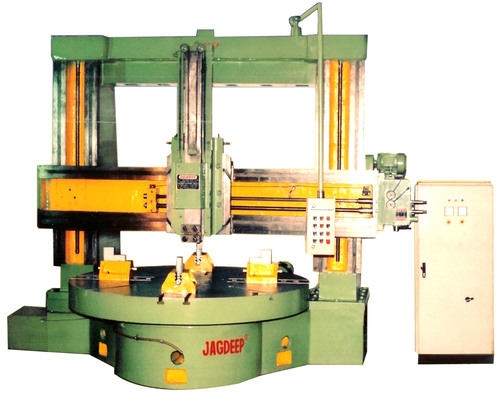
Vertical Turning Lathe VTL 1000 mm
Product Details:
- Product Type Vertical
- Material Cast Iron
- Cutting Thickness Up to 100 mm
- Cutting Speed 30 - 300 RPM (variable)
- CNC Or Not Normal
- Automatic Grade Automatic
- Control System Manual / Electrical
- Click to View more
X
Vertical Turning Lathe VTL 1000 mm Price And Quantity
- INR
- 1 Unit
Vertical Turning Lathe VTL 1000 mm Product Specifications
- Max Turning Diameter: 1000 mm, Max Turning Height: 750 mm
- Cast Iron
- 30 - 300 RPM (variable)
- Normal
- Rigid structure, smooth operation, long service life
- Vertical
- 1000 mm
- 3700 mm x 2500 mm x 3200 mm
- Automatic
- Manual / Electrical
- Industrial Grey and Blue
- 9000 kg
- 415 V / 3 Phase / 50 Hz
- Up to 100 mm
- Provided
- 750 mm
- 2.2 kW
- 0.01 mm
- Gear Drive
- 3000 kg
- Centralized automatic lubrication
- Heavy duty turning, boring, facing and grooving of large workpieces
- 15 kW
- 110 mm
- 900 mm
- Box Type, extra heavy duty
- 2
- 4 Jaw Independent
Vertical Turning Lathe VTL 1000 mm Trade Information
- As per requirement Per Month
- As per requirement Months
Product Description
| Descriptions | JVT-1 |
| Max. Turning Diameter | 1100 mm |
| Table Diameter | 1000 mm |
| Max. Working Height | 600 mm |
| Max. Vertical Travel of Ram | 500 mm |
| Swivel Angle of Ram Head | ± 30° |
| No. Of Table Speeds | Stepless Infinitely Variable Speed With AC Variable Frequency Drive |
| Range of Table Speed RPM | 6-60 rpm |
| No. of Feeds Vertical/Horizontal | 6 |
| Range Of Feeds Vertical / Horizontal (mm/min) | 3-12 |
| Rapid Traverse of Head (mm/min) | 300 mm |
| Main Motor | 7.5 Hp |
| Ram Feed Motor | 3 Hp |
| Auto Lifting of Cross Rail Motor | 3 Hp |
Standard Accessories.
Auto Feed Of Ram Head: Gear Box for Auto Feed Ram Head both Vertical & Horizontal will be provided with Motor.
Lubrication: Auto Lubrication System a Bed Guide Ways is provided with the machine.
Complete Electricals
Control Panel
One Tool Post (Ram Head)
Leveling Bolts
Leveling Plates
Machine Light
Set of 4 Jaws for Work Piece Clamping
Exceptional Load Capacity and Precision
The VTL 1000 mm stands out for managing heavy workpieces with a maximum table load of 3000 kg and maximum swing diameter of 1000 mm. Its two-tool post configuration and precise spindle bore allow for seamless operations like turning, boring, and grooving, ideally suited for industries handling large cast iron or steel components. Variable cutting speeds further enhance performance across a range of materials.
Rigid, Reliable, and Easy to Operate
Engineered with a box-type bed and an extra heavy-duty frame, this lathe ensures stability and longevity even under continuous industrial use. Equipped with centralized automatic lubrication and a coolant system, the machine minimizes downtime and maintenance, delivering reliably smooth operations. The intuitive control systemavailable in both manual and electrical operationsupports operators in maximizing productivity.
FAQs of Vertical Turning Lathe VTL 1000 mm:
Q: How is the Vertical Turning Lathe VTL 1000 mm typically used in industrial applications?
A: The VTL 1000 mm is primarily used for heavy-duty turning, boring, facing, and grooving operations of large workpieces, especially in manufacturing sectors such as automotive, machinery, and energy. Its robust table and high-capacity capabilities make it suitable for precision machining of cast iron, steel, or similar tough materials.Q: What are the main benefits of using this model for large-scale machining tasks?
A: Key advantages include its high load capacity (up to 3000 kg), large swing diameter (1000 mm), precise setting (0.01 mm), and rigid box-type bed that ensures stability and accuracy. Automatic lubrication and a centralized coolant system enhance operational efficiency, while variable cutting speeds accommodate a range of material types for optimum results.Q: When is it recommended to use a 4 Jaw Independent chuck in machining processes?
A: The 4 Jaw Independent chuck is ideal for holding irregularly shaped or asymmetrical workpieces. It provides individual adjustment for each jaw, ensuring a secure grip and accurate centering, which is essential for heavy-duty turning and advanced machining tasks required by this VTL.Q: Where can this VTL model be installed and what are its space requirements?
A: This VTL is designed for installation in industrial workshops or manufacturing plants with sufficient space to accommodate its footprint of 3700 mm x 2500 mm x 3200 mm. The machines robust construction suits environments that handle heavy-duty or large-scale machining projects.Q: What is the process for maintaining the VTL 1000 mm for optimal performance?
A: Maintenance is streamlined with its centralized automatic lubrication system, which ensures all key components remain properly lubricated. Regular inspections of the gear drive, chuck, and electrical systems, along with timely coolant replenishment, are recommended to ensure the machine continues operating smoothly and reliably.Q: How does the manual/electrical control system enhance operator usage and safety?
A: The dual manual/electrical control system provides flexibility for operators to manage machining operations according to the requirements of each project. This configuration supports precise adjustments, safer handling of large workpieces, and adaptability to either automated or hands-on processes.Tell us about your requirement

Price:
Quantity
Select Unit
- 50
- 100
- 200
- 250
- 500
- 1000+
Additional detail
Mobile number
Email

Other Products in 'VTL Machine' category


JAGDEEP FOUNDRY
GST : 03AABFJ0747Q1Z9
GST : 03AABFJ0747Q1Z9
G.T. Road, Near Amritsar Bypass,Batala - 143505, Punjab, India
Phone :08071779258
 Send Inquiry
 Send Inquiry
 Send SMS
 Call Me Free
JAGDEEP FOUNDRY
All Rights Reserved.(Terms of Use)
Developed and Managed by Infocom Network Private Limited.
Developed and Managed by Infocom Network Private Limited.

