

Call us now
08071779258
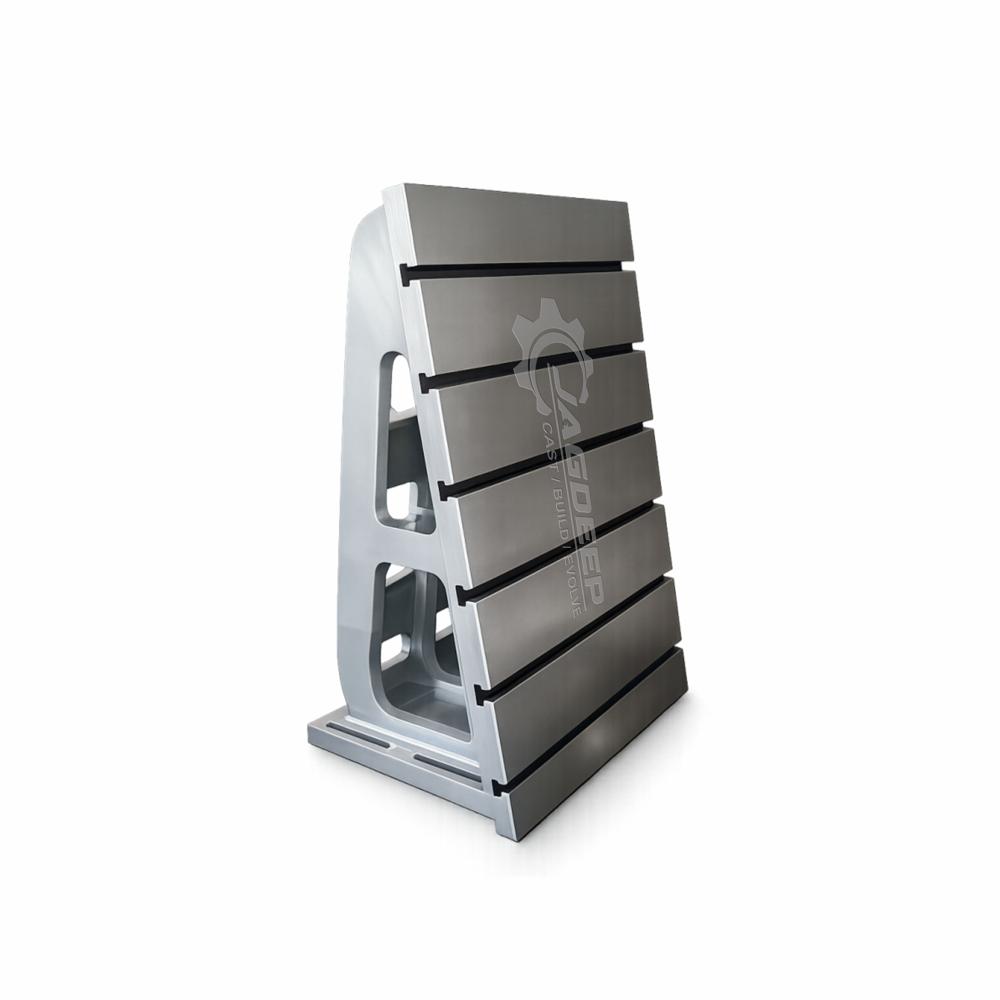
Cast Iron Angle Plate
100000.0 INR/Unit
Product Details:
- Usage Other
- Function Marking, Inspection, checking accuracy
- Accuracy 100 %
- Operating Mode Manuel
- Product Type Cast Iron Angle Plate
- Control Mode Manuel
- Standard High
- Click to View more
X
Cast Iron Angle Plate Price And Quantity
- 100000.0 INR/Unit
- 1 Unit
Cast Iron Angle Plate Product Specifications
- Manuel
- High
- Other
- Silver
- 100 %
- Manuel
- Cast Iron Angle Plate
- Marking, Inspection, checking accuracy
Cast Iron Angle Plate Trade Information
- 1 Unit Per Month
- 3-4 Months
Product Description
Being an illustrious organization of this field, we are successfully engaged in manufacturing, exporting and supplying Cast Iron Angle Plate to our clients in different technical specifications. The offered angle is manufactured under the supervision of ingenious professionals with the aid of highly advanced technology. Especially used for holding workpiece vertically for performing several machining operations, this plate is made available in bulk. Apart from this, our clients can purchase the provided Cast Iron Angle Plate at economic prices from us.
Key points:
- High strength
- Strong base
- Long life
- Easy to maintain
Jagdeep Cast Iron Angle Plates are used for clamping the work piece in the vertical positionfor layout, tooling and machining. These Angle plates are also used as a vertical reference for inspection.
Standard Sizes of Large size Angle Plates
| Sizes Available (in mm) | ||
| H | L | B |
| 1200 | 1000 | 600 |
| 1500 | 1500 | 900 |
| 1500 | 1200 | 1000 |
| 1600 | 900 | 900 |
| 1676 | 1524 | 1200 |
| 2000 | 1500 | 1200 |
| 2200 | 700 | 1100 |
| 2500 | 1000 | 1400 |
| 3000 | 1500 | 1200 |
| 5000 | 1300 | 2000 |
Customized sizes can also be provided as per client's requirement
Special Features
All plates are finished on our CNC Machines to get higher accuracy and rigidity
All castings are Stress Relieved, in house, to achieve higher accuracy and strength
Engineered for Precision
Crafted to deliver uncompromised accuracy, our Cast Iron Angle Plate stands out for its exceptional precision in measuring and marking. Designed to meet high industry standards, it ensures flawless results whether youre inspecting components or aligning machinery during assembly. Its durability and versatility make it an essential tool for industrial professionals seeking consistent quality.
Robust and Versatile Design
This angle plate features a high-grade cast iron body with a protective silver finish, providing outstanding resistance to wear and corrosion. Its manual control mode supports effortless adjustment and operation, making it suitable for a wide range of applications including layout marking, dimensional inspection, and quality assurance checks in industrial environments.
FAQs of Cast Iron Angle Plate:
Q: How is the Cast Iron Angle Plate used in industrial applications?
A: The Cast Iron Angle Plate is primarily utilized for marking, inspection, and checking the accuracy of workpieces in machine shops and quality control departments. Its 100% accuracy makes it suitable for supporting objects at precise angles during layout or measurement tasks.Q: What benefits does a manually operated angle plate offer over automated alternatives?
A: A manually operated angle plate provides greater control and flexibility, enabling users to make fine adjustments easily during marking or inspection. This hands-on operation is ideal for settings that require high precision and adaptability to various measurements.Q: When should I use a Cast Iron Angle Plate in my workflow?
A: You should use a Cast Iron Angle Plate whenever you need to verify perpendicularity, mark out components, or check the accuracy of angles during the inspection phase or before machining. It is especially valuable at stages where precision alignment is essential.Q: Where is the Cast Iron Angle Plate commonly utilized?
A: This product is widely used in industrial environments such as manufacturing plants, tool rooms, metrology labs, and workshops where high-precision tasks like quality control, layout inspection, and accuracy checking are performed.Q: What is the manufacturing process behind these angle plates?
A: Cast Iron Angle Plates are produced through a casting process using high-grade iron, followed by rigorous finishing and grinding to achieve precise dimensions and 100% accuracy. Each plate undergoes strict quality checks to ensure it meets industry standards.Q: How does the standard of the angle plate affect its performance?
A: The high standard of manufacturing ensures the angle plate maintains accurate right angles and flat surfaces, which is crucial for consistent results in marking, inspection, and control operations. This level of precision boosts reliability and efficiency in industrial processes.Tell us about your requirement

Price:
Quantity
Select Unit
- 50
- 100
- 200
- 250
- 500
- 1000+
Additional detail
Mobile number
Email


JAGDEEP FOUNDRY
GST : 03AABFJ0747Q1Z9
GST : 03AABFJ0747Q1Z9
G.T. Road, Near Amritsar Bypass,Batala - 143505, Punjab, India
Phone :08071779258
 Send Inquiry
 Send Inquiry
 Send SMS
JAGDEEP FOUNDRY
All Rights Reserved.(Terms of Use)
Developed and Managed by Infocom Network Private Limited.
Developed and Managed by Infocom Network Private Limited.

